



Juergen Menzel

Achim Schmitz

Mikheil Elizbarashvili
Purpose of the Association
According to the statutes, our goals are:
– Organising international encounters
– Providing training courses on methods of civil conflict management, non- violence and intercultural understanding
– Implementing peace-building projects in culture, sport and schools
– Supporting and assisting war victims, politically persecuted persons and conscientious objectors
– Development of funding opportunities for civil society
– Public relations work on peace issues and on overcoming nationalism, racism and misanthropy, and on strengthening democracy and the rule of law
– Networking with other organisations and individuals involved in peace education in Germany and abroad
The association pursues exclusively and directly charitable purposes as per the statutes. It is registered in the Ulm Register of Associations under No. 50072.
Complete statutes: here
Membership declaration: here
board members: Jürgen Menzel + N.N.
Advisory board: Achim Schmitz + Mikheil Elizbarashvili
postkarte-fb-andereerklaerendenkrieg
History
The “Working Group on Peace Policy Education” e.V. (afpb) was founded in 1977 and has been advocating for increased peace education in society and schools. For many years, it served as the sponsoring organization for more than ten peace education institutions in collaboration with the Federal Agency for Civic Education (history of the association).
Today, there are various nationwide networks for peace education and a national exchange. In Baden-Württemberg, the Service Point for Peace Education was established in cooperation with the Ministry of Education and the State Agency for Civic Education, where we are actively involved.
The association is now primarily a network of peace education trainers and speakers based in Aalen, with an office in Berlin.

Friedensbildung-BW-logo-A
Networking
We are a member of the Baden-Württemberg Peace Education Network and are committed to strengthening peace education in schools and in society. In doing so, we support the Peace Education Service Centre, which provides offers for schools in cooperation with the Ministry of Education and Cultural Affairs and the State Centre for Political Education.
With act for transformation, we organise various peace education projects in Germany and the South Caucasus. We are actively involved in the campaign for a right to asylum for conscientious objectors, which is coordinated by connection e.V. and internationally with various Quaker organisations.
Translated with DeepL.com (free version)
Berlin-Statue
International Quaker Office Berlin
Since 1925, the office in Berlin has been used by German and international Quakers as both an office and a place of worship. Initially, the “International Quaker Office,” operated by British and American Quakers, moved in to coordinate Quaker humanitarian aid for the German population, known as the “Quaker Feeding Program.” The office was led by an “International Secretariat” consisting of an American, a British, and a German Quaker.
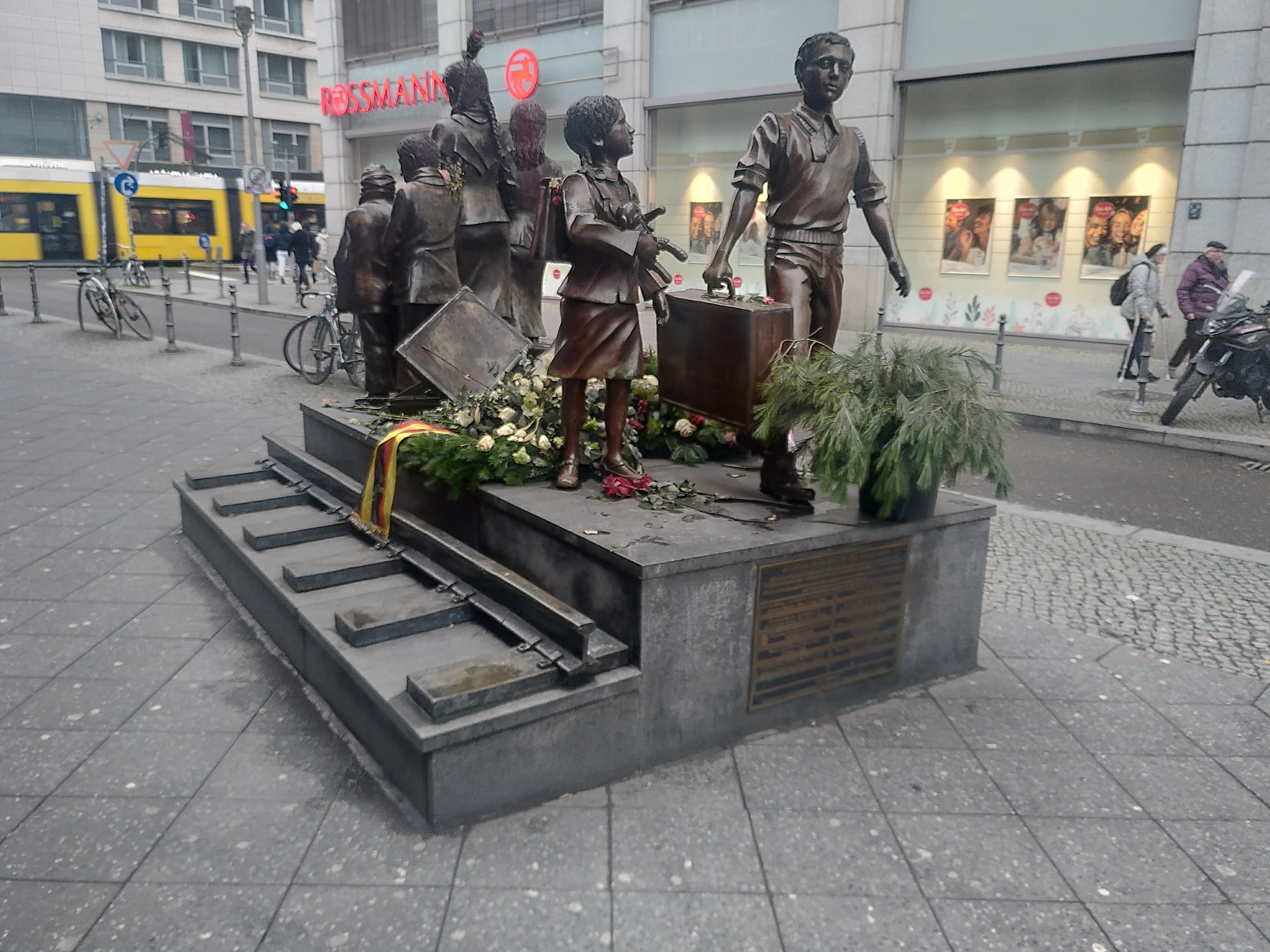
With the onset of the Nazi era, the focus of the work shifted: the Quaker office became an important contact point for persecuted individuals, organizing their emigration. The office played a role, for example, in the so-called “Kindertransporte,” through which a total of 10,000 Jewish children were rescued by being taken to foster families in England. Near the Quaker office today, there is a memorial dedicated to the children of the Kindertransporte.
When the United States entered the war, the last foreign Quaker left the office in the summer of 1941. German Quakers managed to keep the office operational under challenging circumstances for some time afterward.

b_w_logo-01_1__1

act-logo
Global Peace Space – Berlin
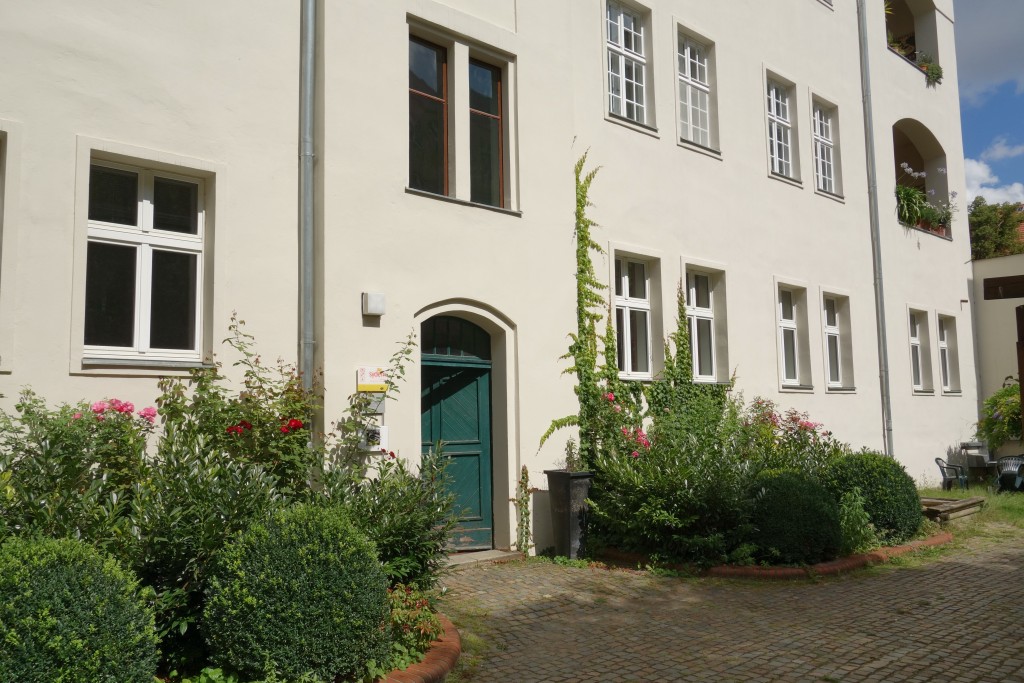
We are located at Planckstr. 20, right next to the Friedrichstraße S-Bahn and U-Bahn station. The office is on the ground floor in the rear building on the left, in a very quiet location in the centre of Berlin and close to the parliament district.
We share the office with act for transformation, a non-profit co-operative working in the field of peace projects and trainings, as well as global learning. (www.act4transformation.net)
As well as with Blacks & Whites together for Human Rights, a migrant organisation that campaigns for the rights and empowerment of refugees.
The idea of the Global Peace Space is to offer a live or virtual space where people from different countries, regions, social and cultural backgrounds can meet and exchange ideas, share their perspectives and thus develop mutual understanding and a more peaceful coexistence. The Berlin Global Peace Space has rooms for seminars and classes, as well as a fully equipped kitchen and a green inner courtyard. The various organisations share an office space.